Investor Relations
Interim Financial Results Briefing for the Year Ending March 2027
Presenter: Takayoshi Miyamoto, President and Representative Director
I am Miyamoto, and I will present the interim financial results. Today's presentation will cover two topics: the interim financial results and the financial outlook. Let me begin with the interim financial results.
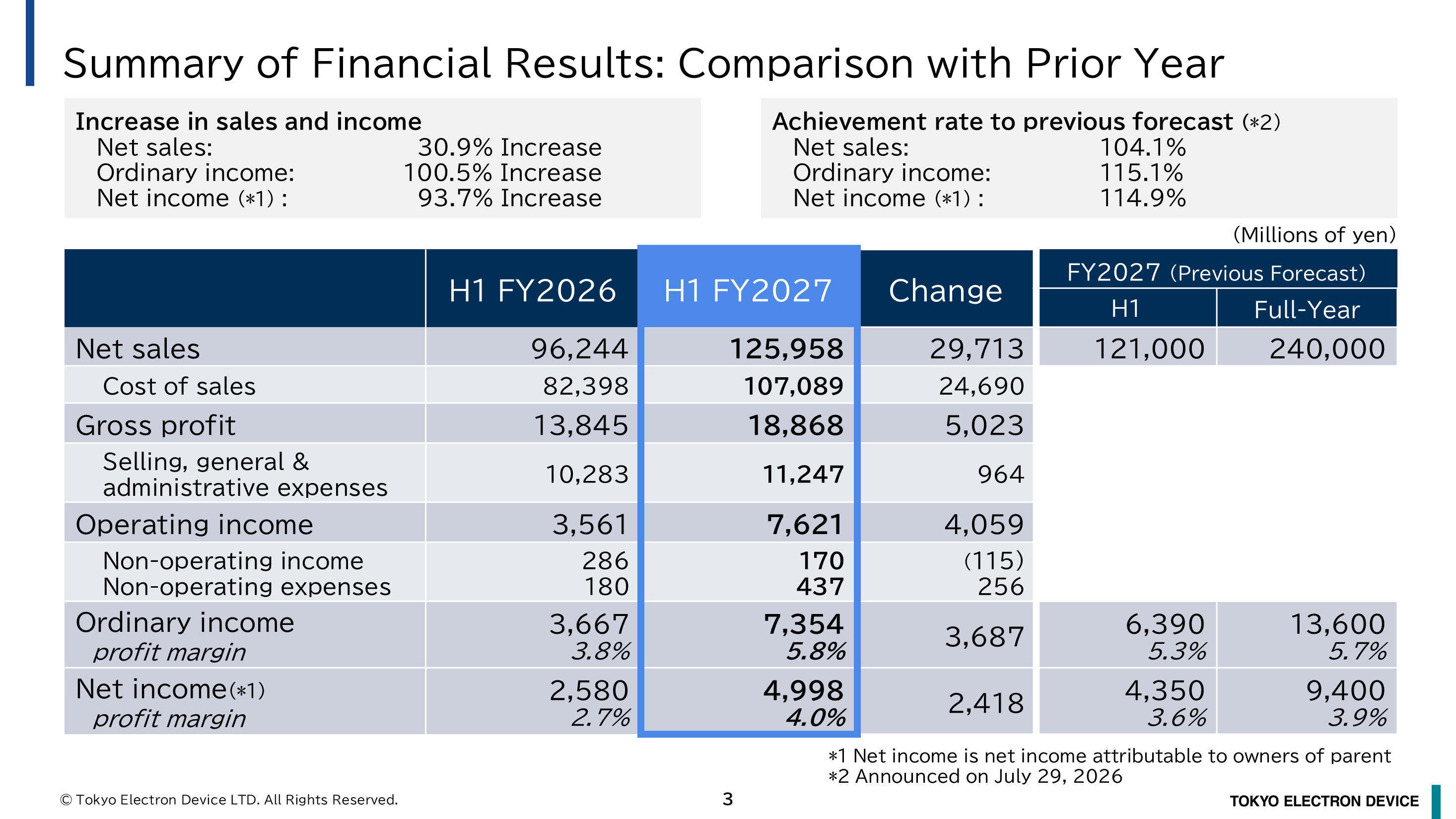
First, let me provide an overview of our financial results. For the year-on-year comparison, please refer to the upper left of the slide. For the first half of the fiscal year, net sales increased 30.9% year on year to ¥125.958 billion, and ordinary income increased 100.5% to ¥7.354 billion. The ordinary income margin was 5.8%. Net income attributable to owners of the parent increased 93.7% to ¥4.998 billion.
At the time of our first-quarter financial results announcement on July 29, we revised our first-half forecasts upward. For our achievement rates against these revised forecasts, please refer to the upper right of the slide.
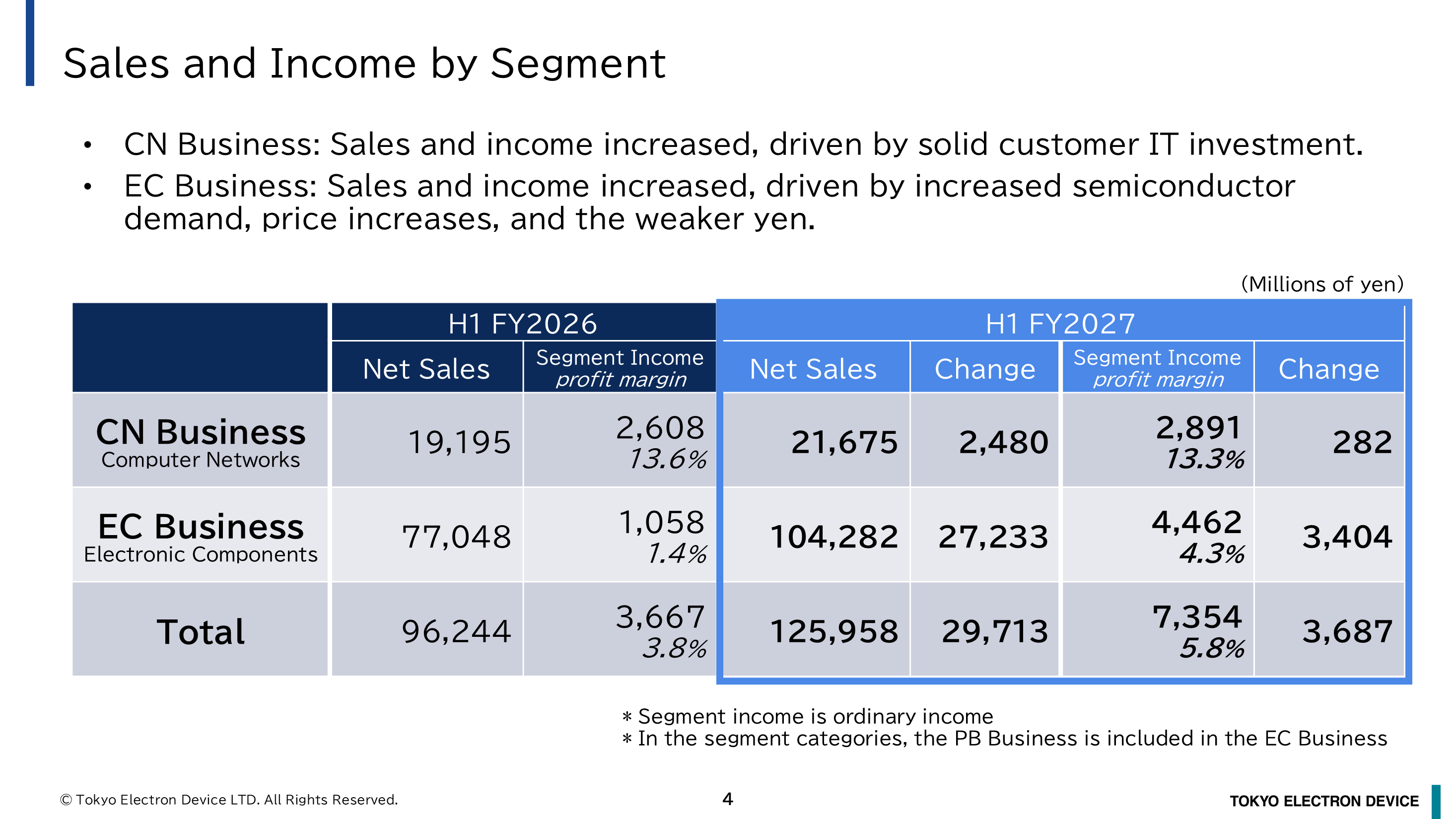
Next, I will discuss net sales and profit by segment.
In the CN business, both net sales and profit increased, supported by customers' solid IT investment. Net sales increased 12.9% year on year to ¥21.675 billion, while segment profit increased 10.8% to ¥2.891 billion. The profit margin decreased by 0.3 percentage points year on year. This was mainly because the previous year included a greater proportion of high-margin projects, such as system integration and services, while the proportion of such projects was somewhat lower in the current period.
In the EC business, net sales increased 35.3% year on year to ¥104.282 billion, while segment profit reached ¥4.462 billion, approximately four times the level of the previous year. In addition to the increase in profit accompanying higher net sales, profitability was also supported by factors such as higher prices and the weaker yen.
Next, I will explain the performance of each segment.
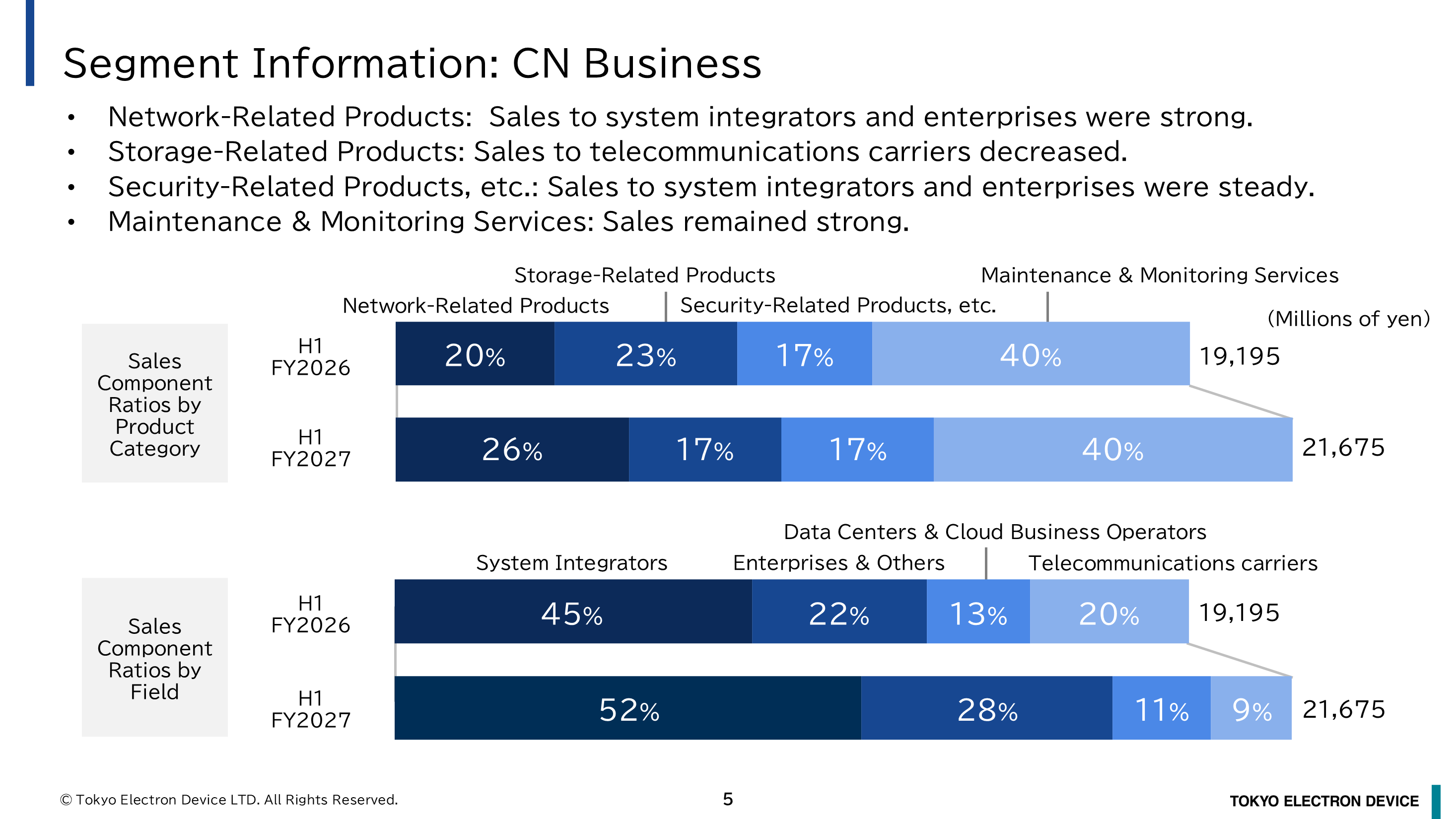
In the CN business, network products, security products, and maintenance and monitoring services performed steadily. The sales of storage-related products declined slightly, due in part to a large project for a telecommunications carrier in the previous year, as well as some transactions that could not be delivered during the period due to longer lead times.
By customer type, sales to system integrators acting as prime contractors increased significantly, driven by strong growth in projects for the public and financial sectors, resulting in a higher share of sales. Direct sales to enterprise customers also remained solid.
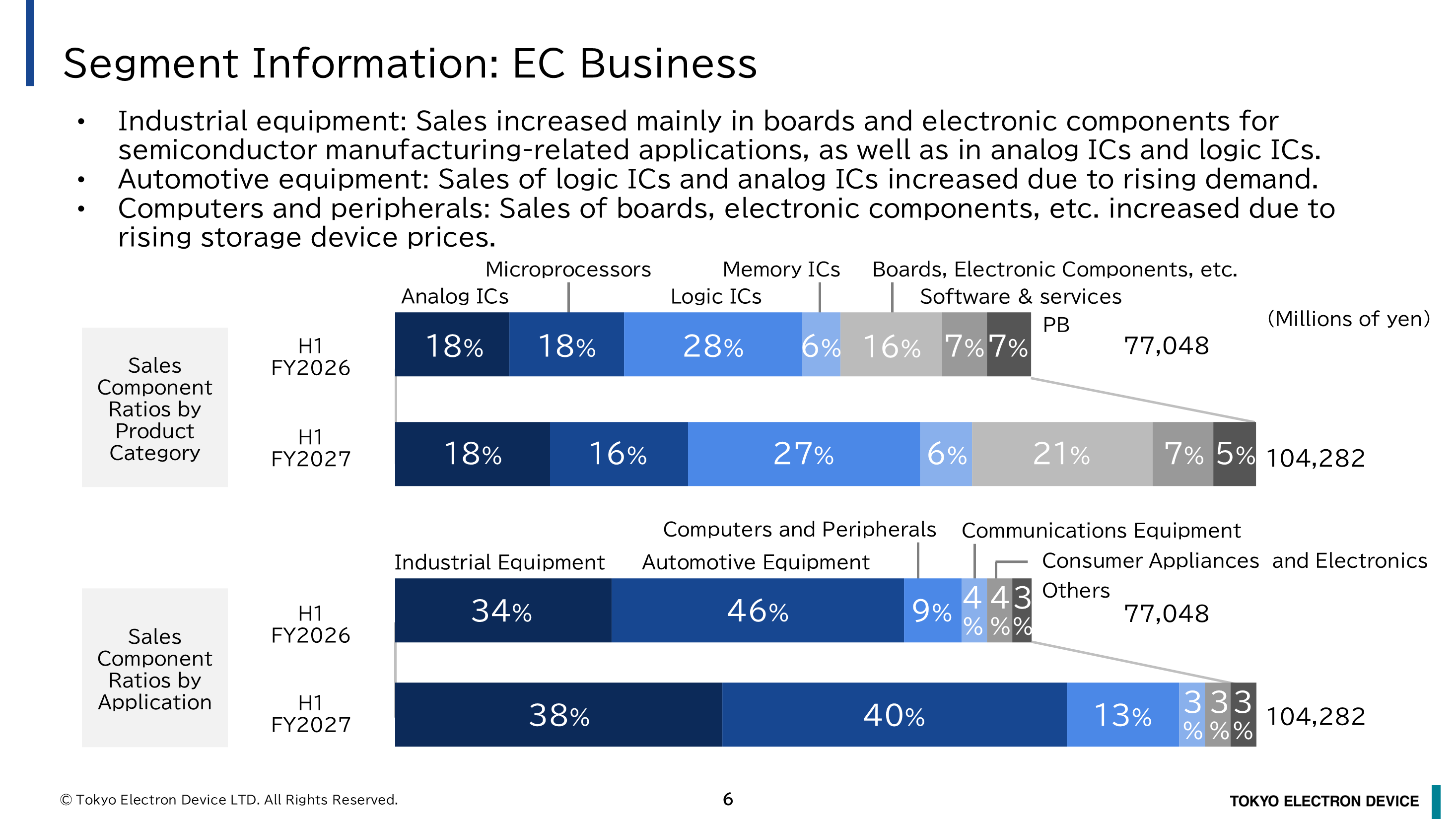
Next, I will discuss the EC business. Sales to industrial equipment customers increased significantly, with semiconductor manufacturing applications making a particularly strong contribution. Sales of analog ICs, logic ICs, boards, and electronic components all increased. Sales to automotive equipment customers also remained solid. Although their share of sales declined slightly, sales in value terms increased.
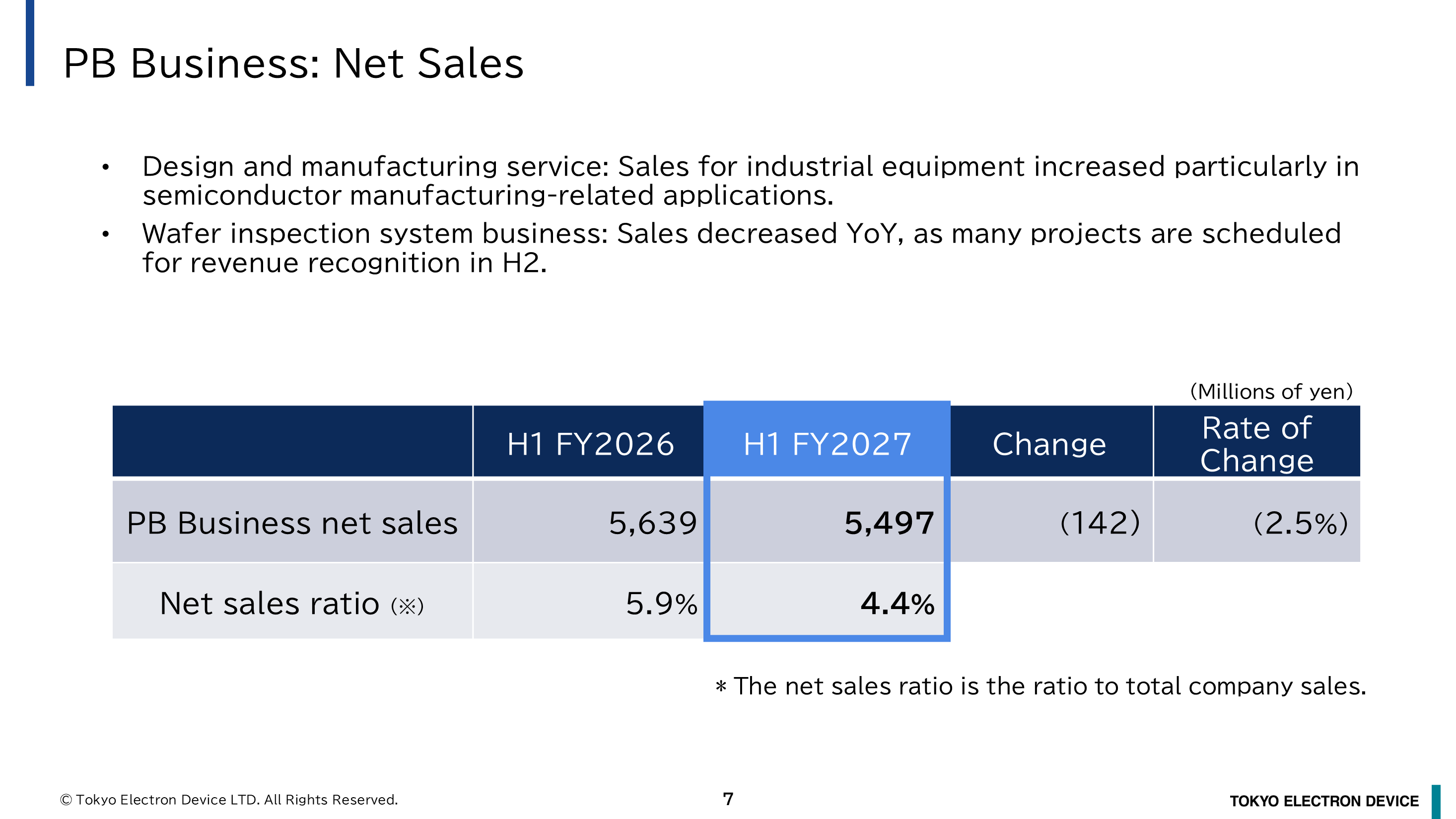
Next, I will discuss the PB business. Net sales were ¥5.497 billion, down 2.5% year on year. In the design and manufacturing services business, sales related to semiconductor manufacturing, which I mentioned earlier, continued to grow strongly. On the other hand, sales in the wafer inspection system business decreased year on year, mainly because many projects are scheduled for delivery and customer acceptance in the second half of the fiscal year.
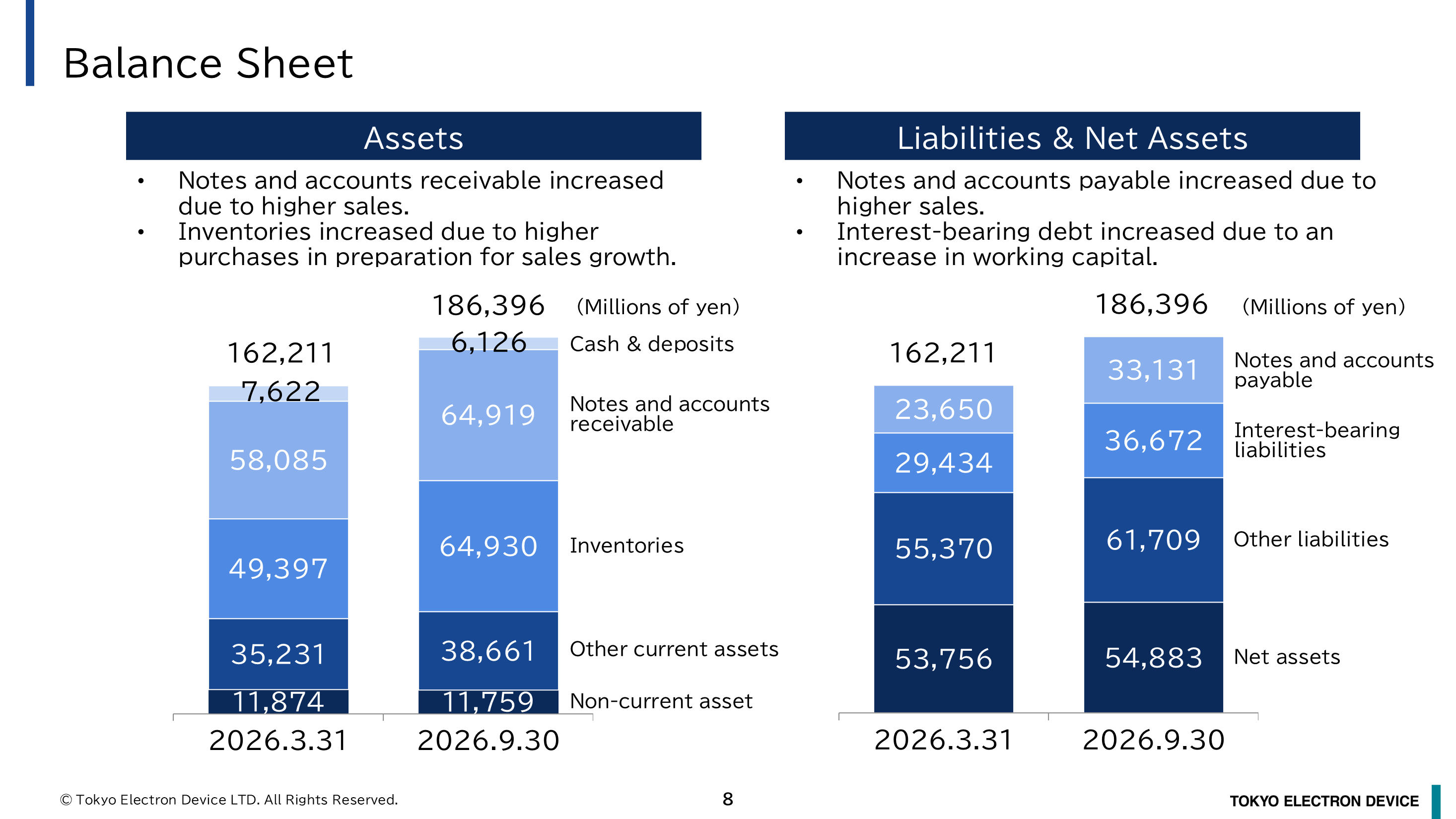
Next, I will discuss the balance sheet. Total assets increased by ¥24.185 billion to ¥186.396 billion. This was mainly due to an increase in notes and accounts receivable accompanying higher net sales, as well as an increase in inventories due to higher procurement in preparation for future sales.
As for liabilities and net assets, notes and accounts payables to suppliers increased in line with higher net sales, while interest-bearing debt increased due to greater working capital requirements.
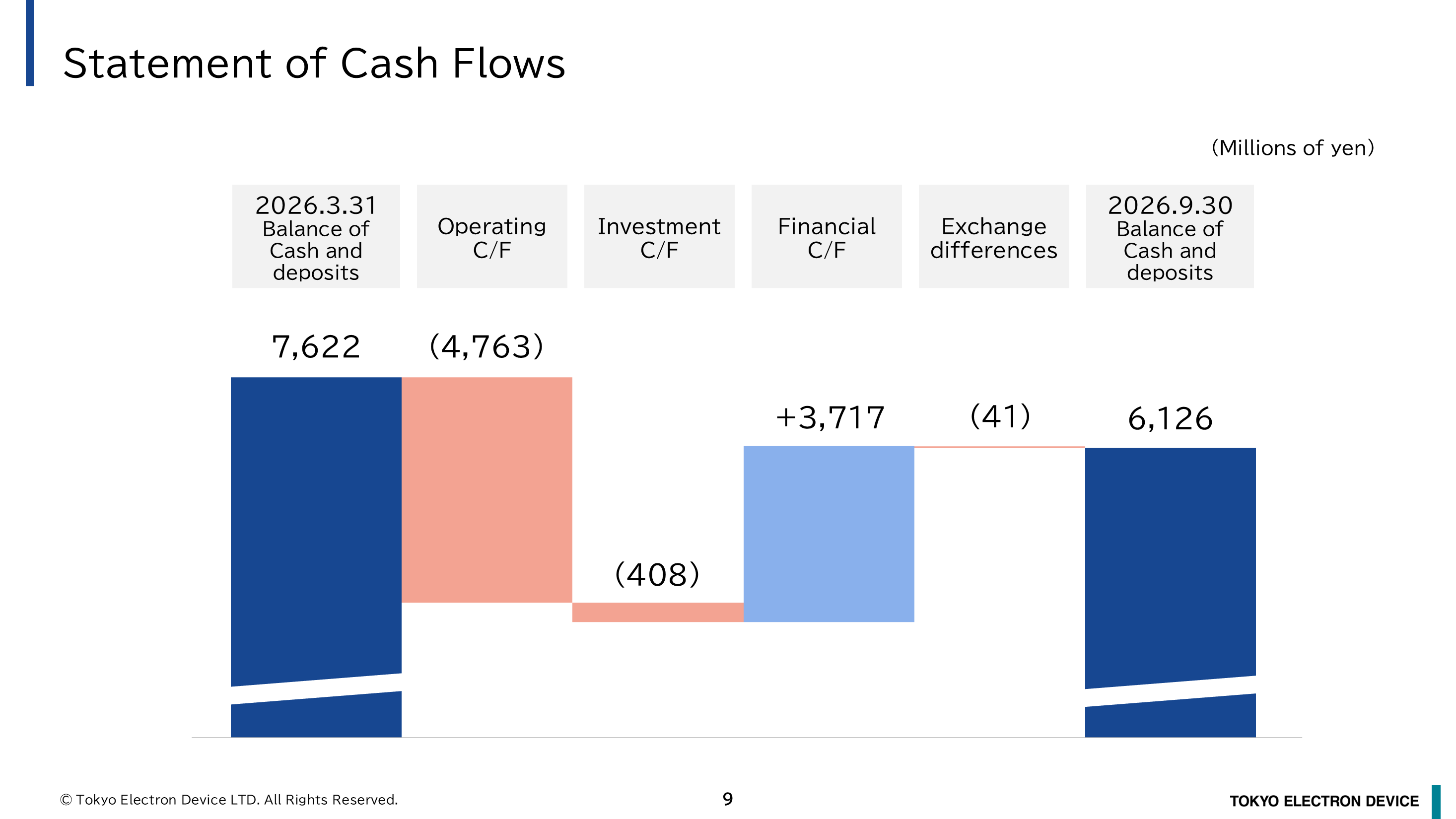
Next, I will discuss cash flows. Net cash used in operating activities was ¥4.7 billion, mainly due to increases in notes and accounts receivables and inventories. Net cash used in investing activities was ¥0.4 billion, mainly due to purchases of intangible assets. Net cash provided by financing activities was ¥3.7 billion, mainly due to funding through short-term borrowings and the issuance of commercial paper.
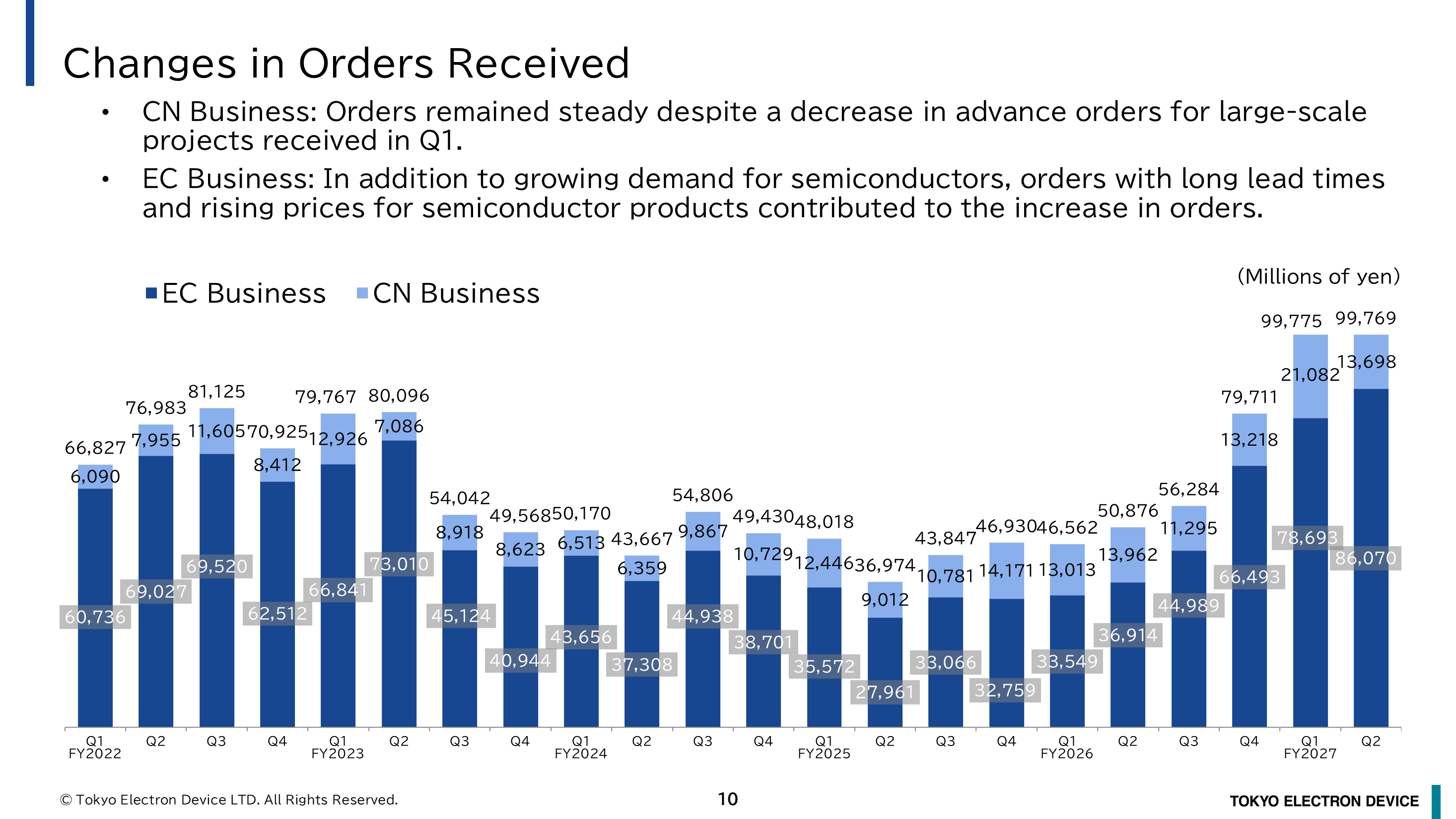
Next, I will discuss the trend in orders received. The dark blue represents the EC business, and the light blue represents the CN business. Orders received in the second quarter totaled ¥99.769 billion, remaining at a very high level following the first quarter.
Orders received in the CN business may appear to have decreased in the second quarter from the first quarter. However, this was because first-quarter orders were at a particularly high level, reflecting a large system project as well as large advance orders placed to avoid longer lead times and price increases. Orders received in the second quarter also remained solid.
As you can see, the EC business is showing a clear recovery in demand. Orders include those with long lead times as well as those reflecting increased customer requirements.
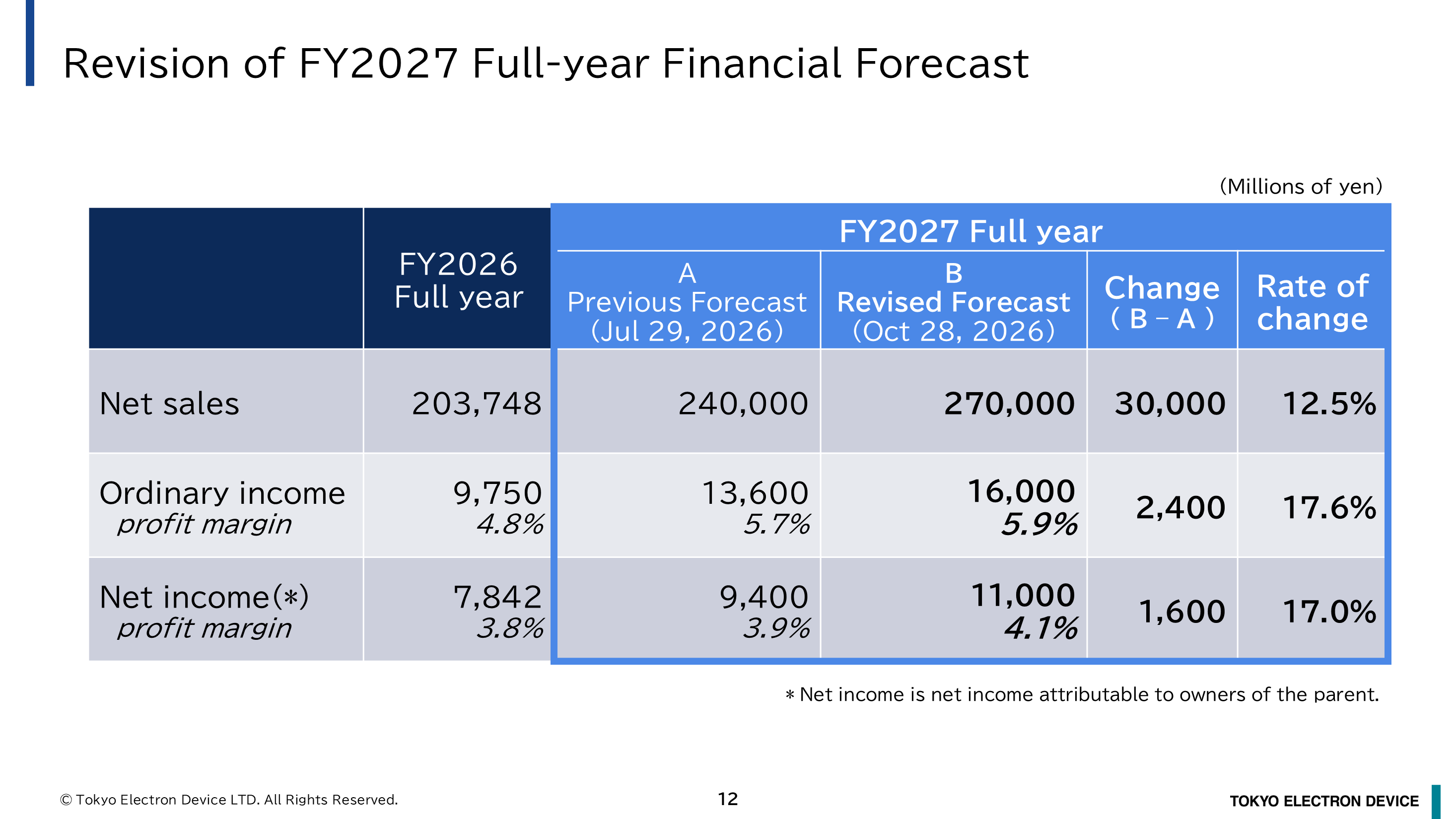
Next, I will discuss our financial outlook. As announced on October 28, we have further revised upward the forecast announced at the time of our first-quarter financial results. We now forecast net sales of ¥270.0 billion, ordinary income of ¥16.0 billion, an ordinary income margin of 5.9%, and net income attributable to owners of the parent of ¥11.0 billion.
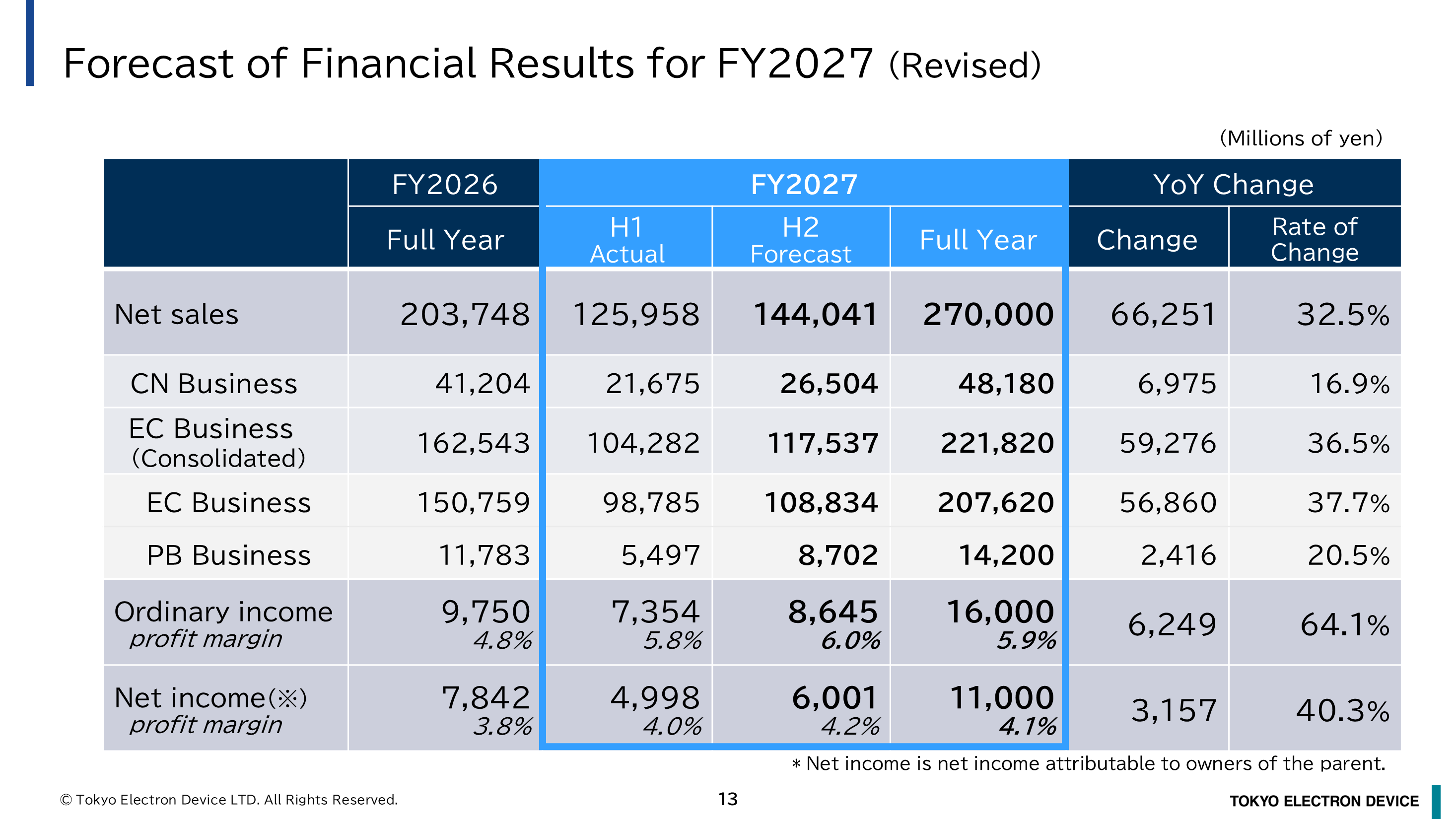
This table shows the breakdown. At the time of our previous announcement on July 29, there were many cases where suppliers revised their shipment schedules at the last minute, making it difficult to confirm delivery schedules for the second half of the fiscal year, which is currently underway. We therefore left our second-half forecast unchanged.
Since then, for both the EC and CN businesses, we have reflected orders for which delivery schedules have been confirmed or the likelihood of realization has increased. In addition, taking into account increased customer requirements in the second quarter, we have significantly raised our forecast for the second half.
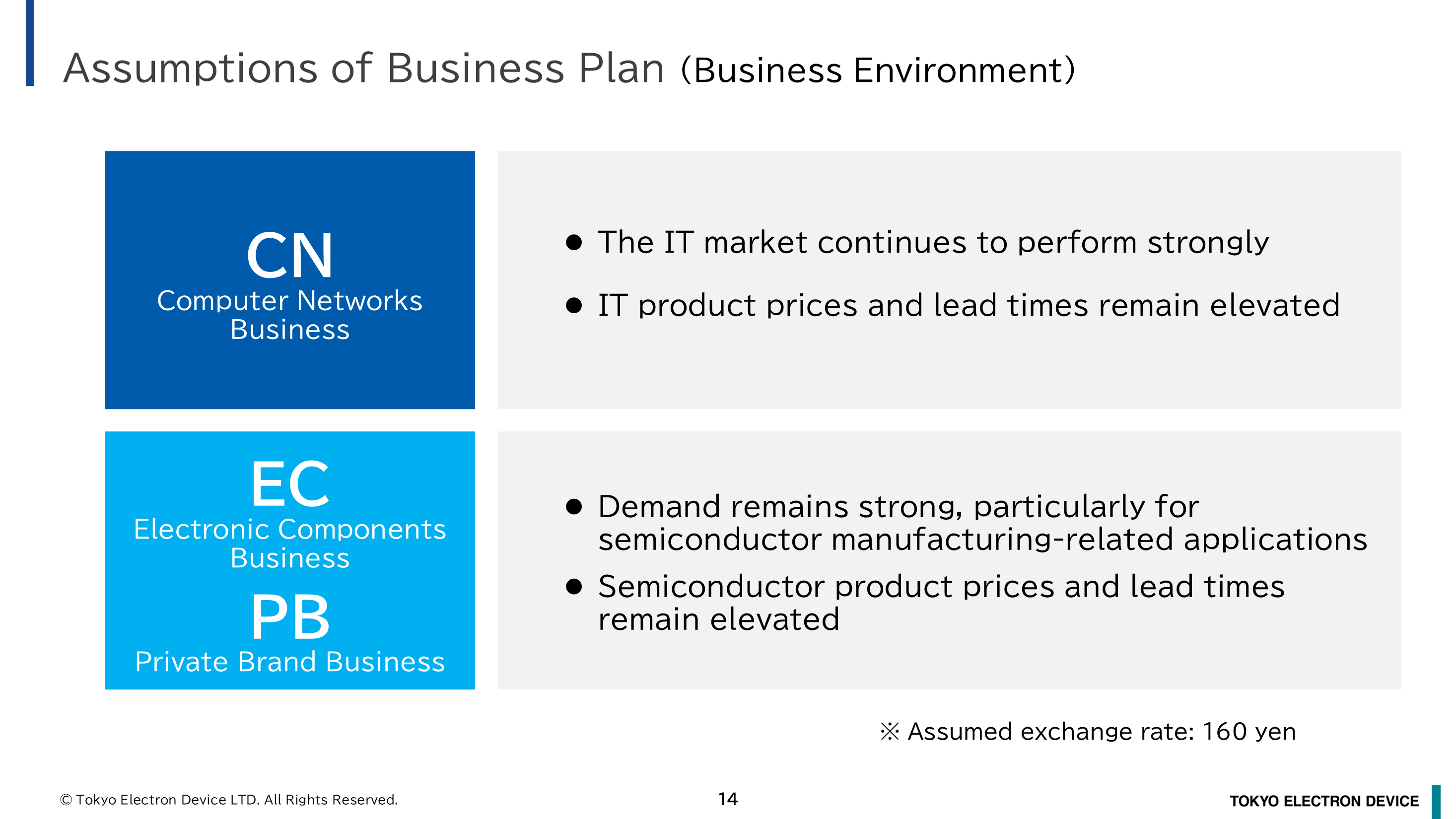
Next, I will discuss the business environment. Prices of both computer systems and semiconductor and electronic device products continue to rise against the backdrop of global inflation. There has also been no change in our assumptions that demand, particularly for AI-related applications, remains strong and that lead times continue to lengthen.
In the CN business, the IT market remains solid. In the EC and PB businesses, demand remains strong, particularly for semiconductor manufacturing applications. We will continue our efforts in the second half under these business conditions.
We assume an exchange rate of ¥160 to the U.S. dollar.
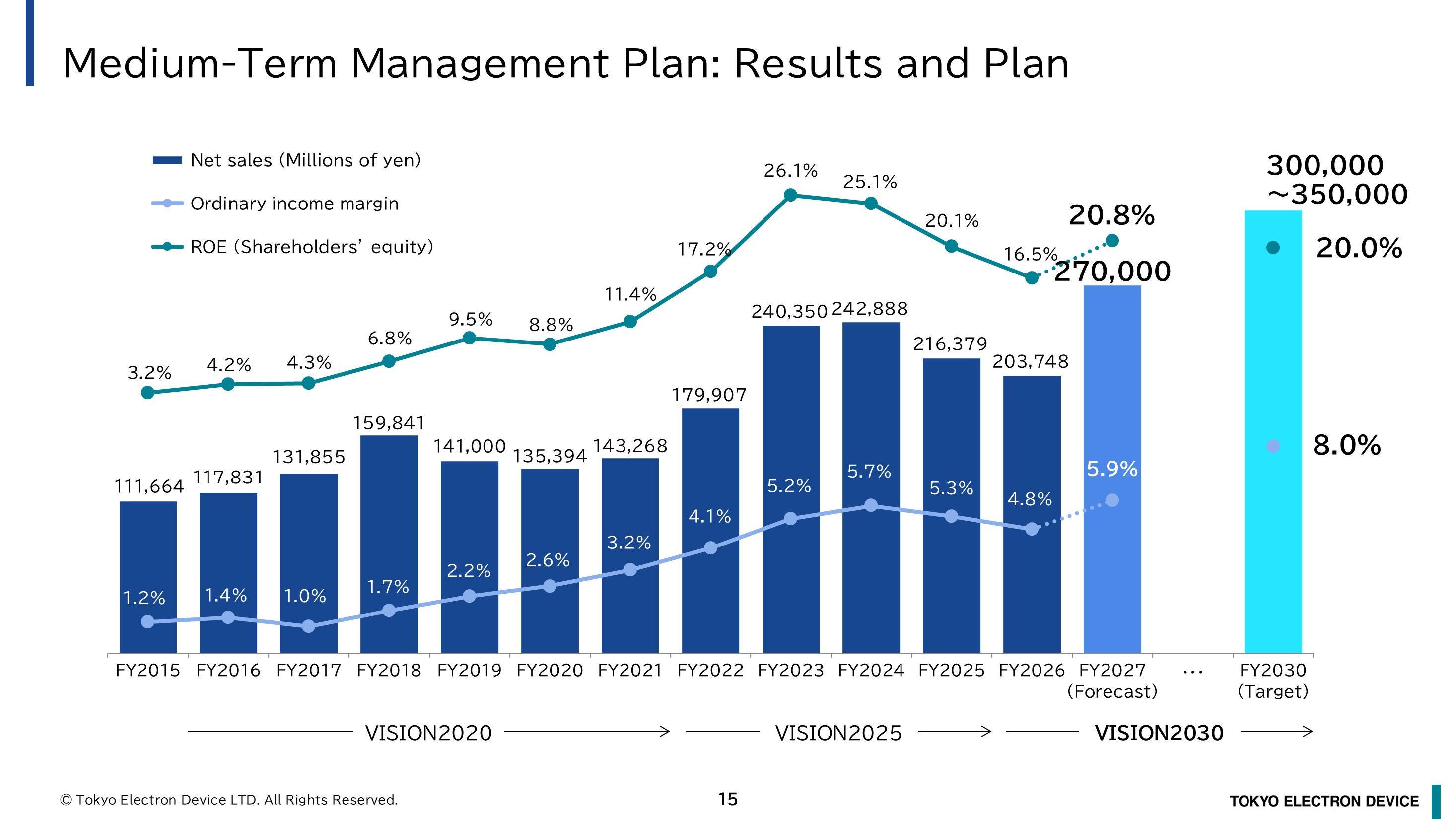
Next, I will discuss our performance and plans under the medium-term management plan. Under VISION2030, we have set a target ordinary income margin of 8%. Our forecast for the current fiscal year is 5.9%, and to close this gap, we will continue to invest in growth areas and expand our initiatives in these areas.
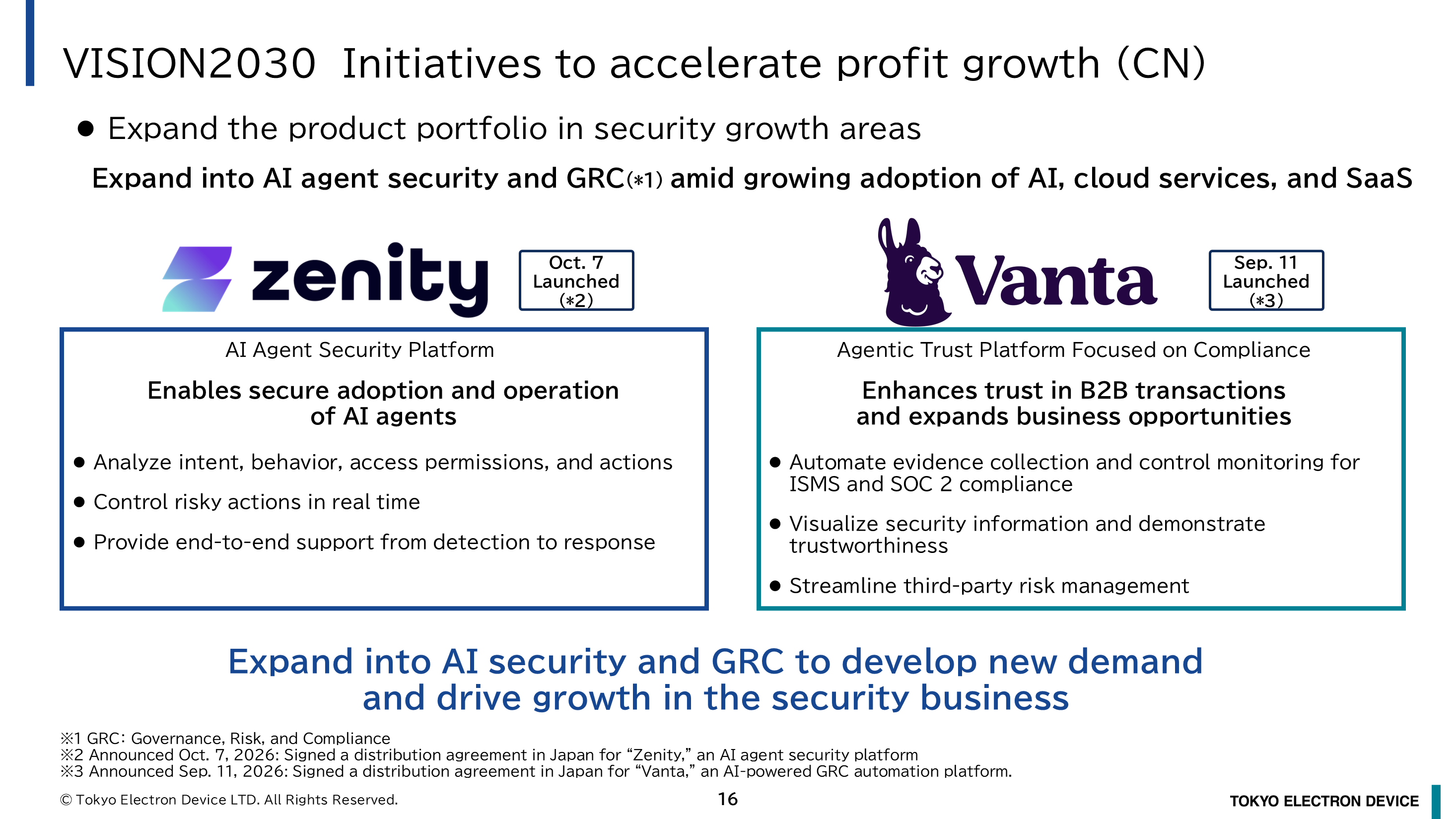
Next, I will briefly explain our initiatives to improve profitability in the CN and EC businesses.
In the CN business, we are working to expand our portfolio of security and security-related products. We entered into a distribution agreement in Japan with Zenity, shown on the left side of the slide, and began sales on October 7.
Currently, the mainstream use of generative AI is through browsers and applications. Going forward, however, we expect the use of AI agents, or programs that operate autonomously, to gradually increase. We are already seeing AI agents create other AI agents on their own in order to accomplish assigned tasks.
AI agents operate across a wide range of environments, including endpoints, servers, IaaS, and SaaS. This creates a need for three key capabilities: visibility into AI agents and their activities to understand the overall landscape, governance, and protection against attacks targeting AI itself. As the market for AI agent security platforms is expected to grow, we have begun initiatives in this area.
On the right side of the slide is Vanta, which we began offering on September 11. To protect the entire supply chain, it is extremely important for companies to understand the security and compliance status of their business partners. In some cases, companies will only do business with partners that have obtained certifications such as ISO 27001, ISMS, or SOC 2. Companies therefore need to obtain and maintain these certifications, but many of the related processes still rely on manual work and file-based management. These tasks can be extremely complex and burdensome. Vanta is a SaaS solution for GRC, or governance, risk, and compliance, that automates these processes. Vanta has been adopted by more than 1,600 companies worldwide. As we expect further automation in this area, we have begun initiatives to expand this business.
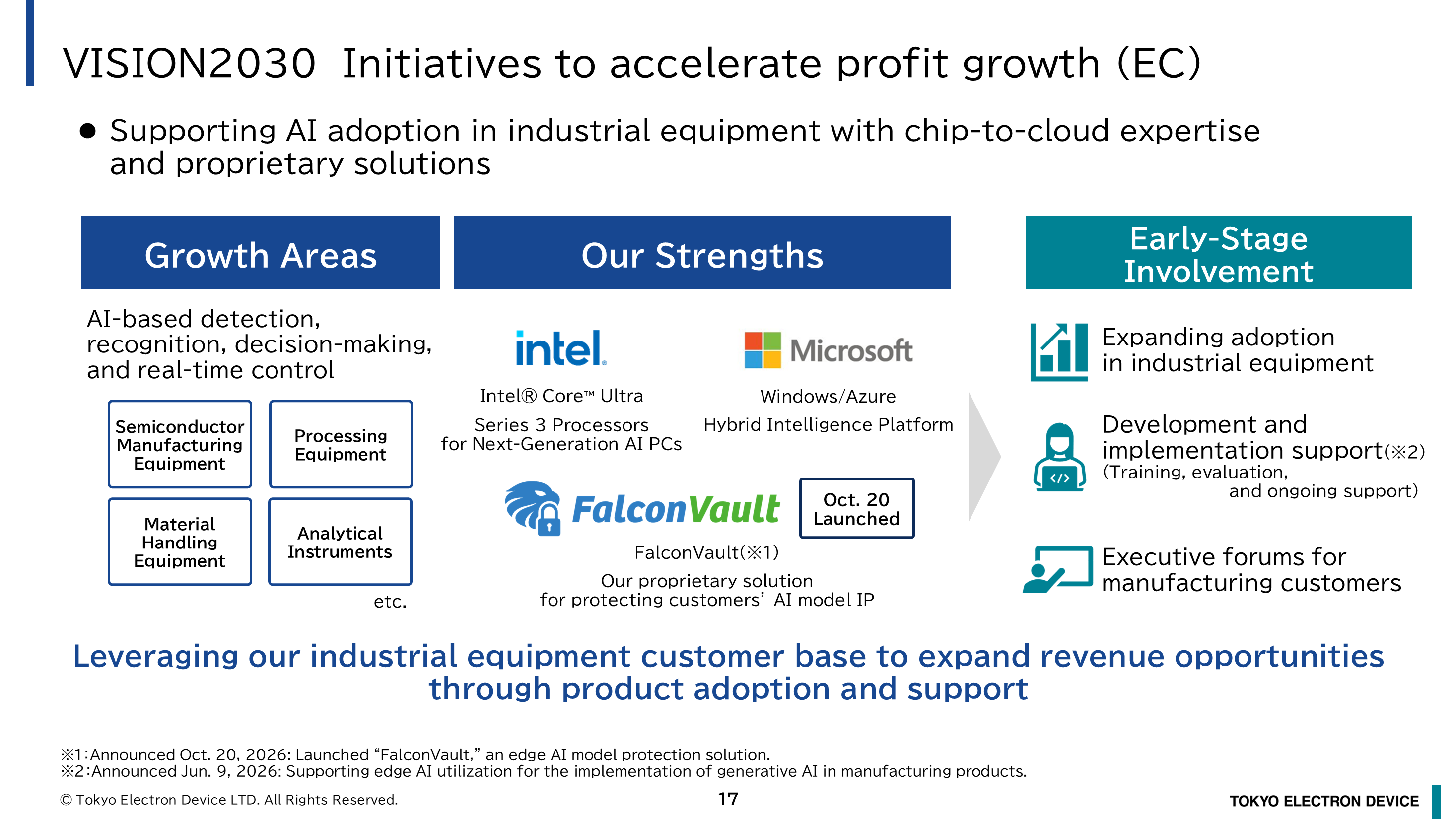
Next, I will discuss the EC business. Following AI agents, edge AI and physical AI are expected to become the next major trends. Our EC business has a broad customer base of industrial equipment manufacturers, including manufacturers of semiconductor production equipment, machine tools, material handling equipment, and analytical instruments. These customers are also beginning initiatives to enhance their competitiveness through AI and move toward the next generation of products and technologies. We have been working to propose Intel and Microsoft platforms from chip to cloud at an early stage. In addition to these efforts, we began offering FalconVault on October 20. FalconVault is our proprietary solution that encrypts and protects customers' AI models. The Falcon series includes several products, and by expanding our offering of these proprietary solutions, we aim to create additional revenue opportunities.
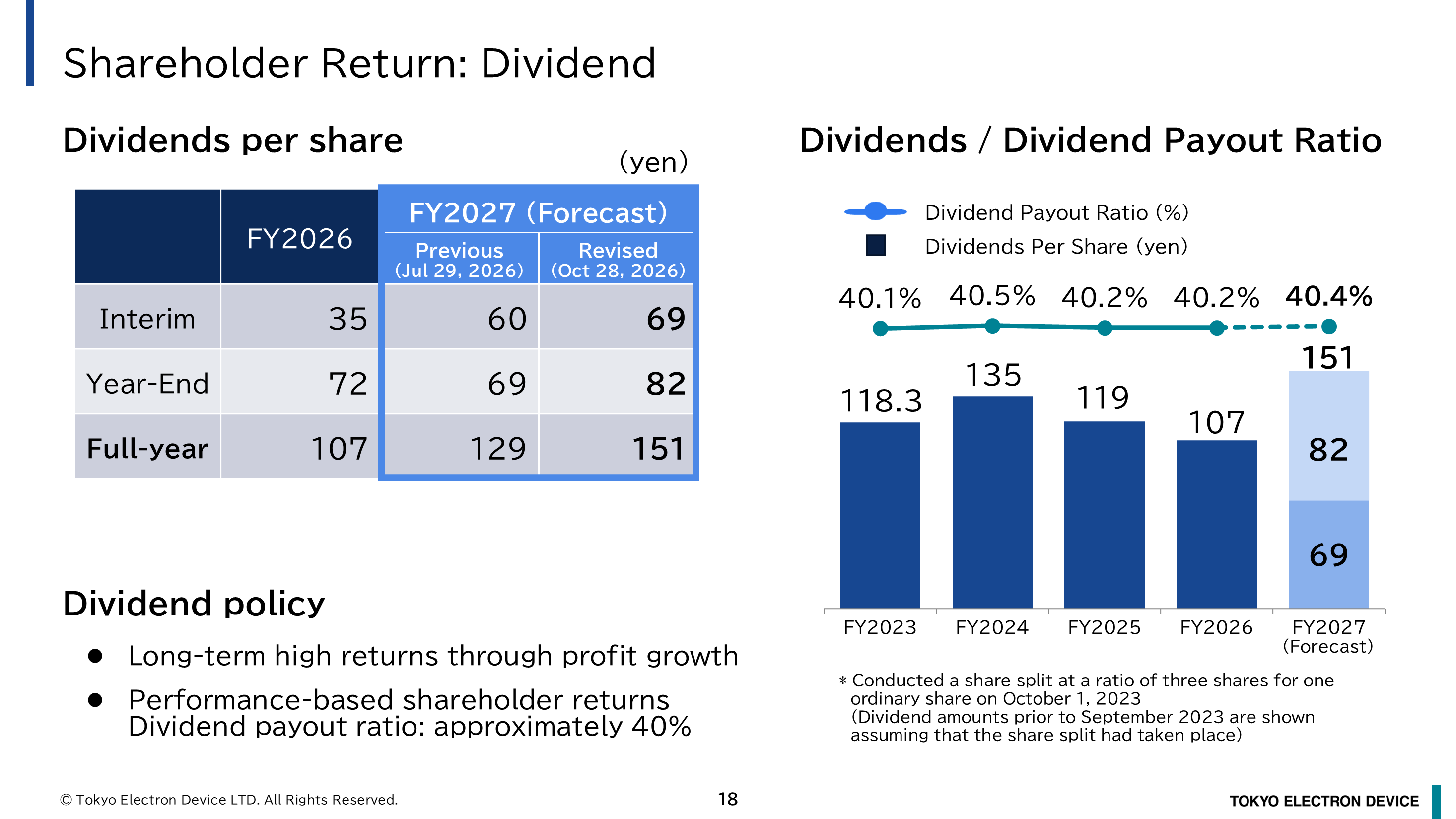
Finally, I will discuss shareholder returns and dividends. Our basic dividend policy is to provide shareholders with high returns over the long term through profit growth, while returning profits in line with our business performance. We target a dividend payout ratio of approximately 40%. Based on this dividend policy and our consolidated earnings forecast, we revised the interim dividend from our previous forecast to ¥69 per share. We also revised our year-end dividend forecast to ¥82 per share. As a result, the annual dividend is forecast to be ¥151 per share, with a dividend payout ratio of 40.4%.
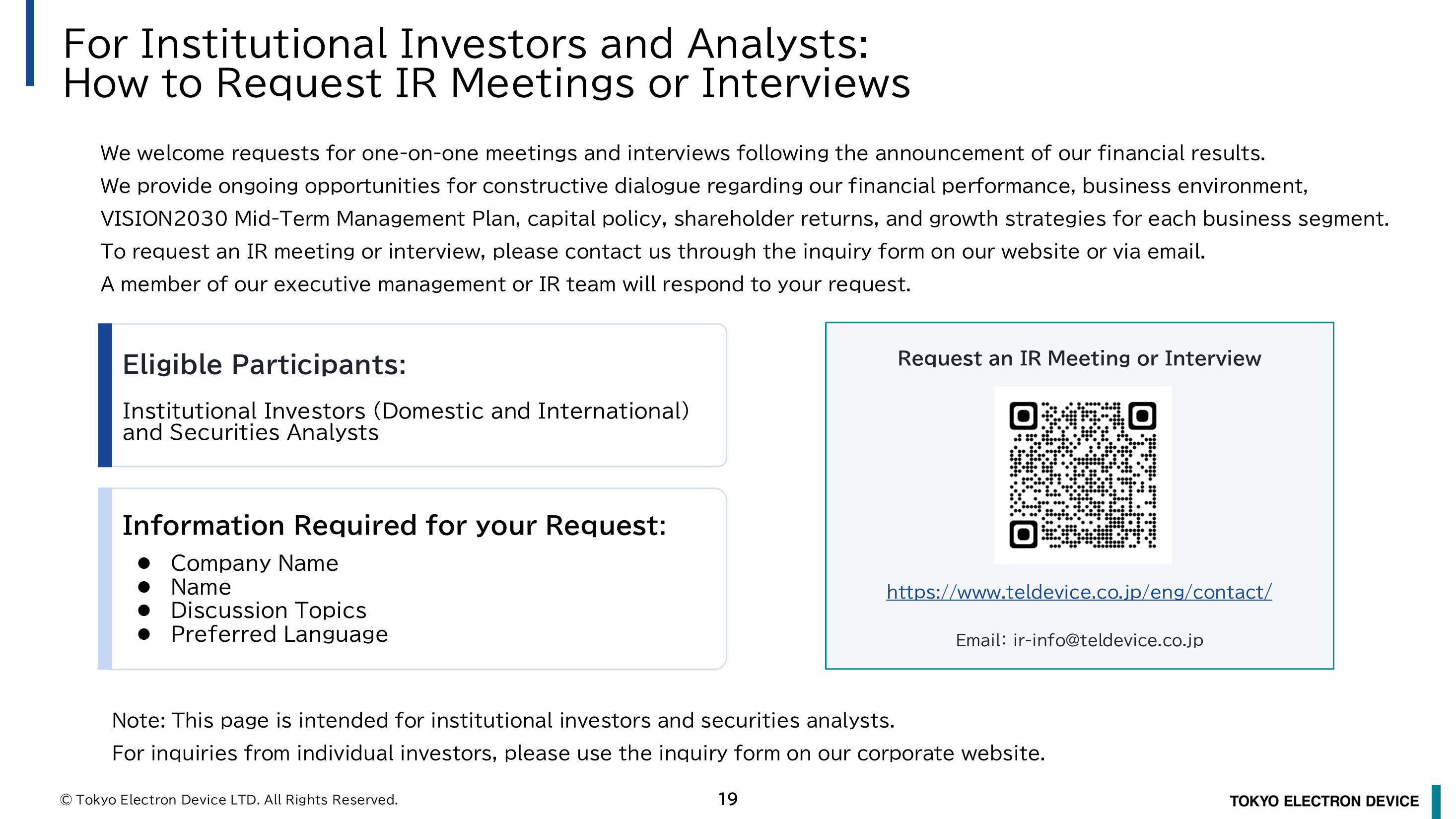
We have some information for investors and analysts. We are available for individual meetings and interviews following our financial results announcements. If you would like to arrange an IR meeting or interview, please contact us through the inquiry form on our website or at the email address shown here.
That concludes my presentation. Thank you very much.
Disclaimer
This transcript has been prepared to provide a clear and accessible record of the Company's presentation and question-and-answer session at the earnings briefing. For readability, certain statements may have been edited, supplemented, or omitted to the extent that such changes do not alter the substance of the original remarks.
The information contained in this transcript is based on information available as of the date of the earnings briefing and may subsequently change due to changes in circumstances or other factors.
This transcript may contain forward-looking statements, including forecasts, plans, and strategies. These statements are based on the Company's judgments and assumptions made in light of information available as of the date of the earnings briefing and involve various risks and uncertainties. Actual results may differ materially from those expressed or implied by these forward-looking statements.
This transcript is provided for informational purposes only and is not intended to constitute a solicitation to invest in the Company. Investors are requested to make investment decisions at their own discretion and responsibility.
The English transcript is a translation of the original Japanese transcript provided for reference purposes. In the event of any discrepancy between the Japanese and English versions, the Japanese version shall prevail.