Investor Relations
Presentation script
My name is Takayoshi Miyamoto, and I am in charge of the administrative division.
I will present the financial results for the third quarter of the fiscal year ending March 2026.
First, an overview of the third-quarter results.
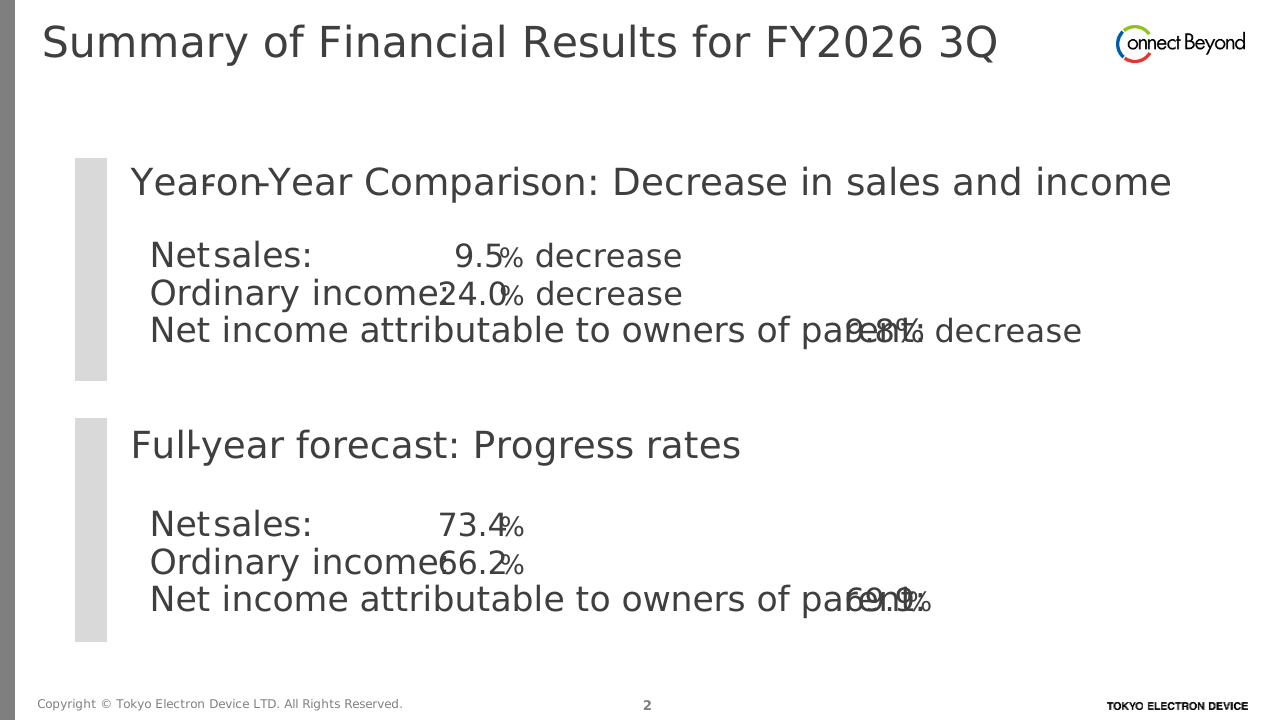
For the third quarter of the fiscal year ending March 2026, we posted a year-on-year decrease in sales and income. With respect to progress against the full-year forecast, net sales reached 73.4 percent, ordinary income reached 66.2 percent, and net income reached 69.9 percent.
Overall, we recognize progress through the third quarter as generally steady.
This is the summary of financial results.
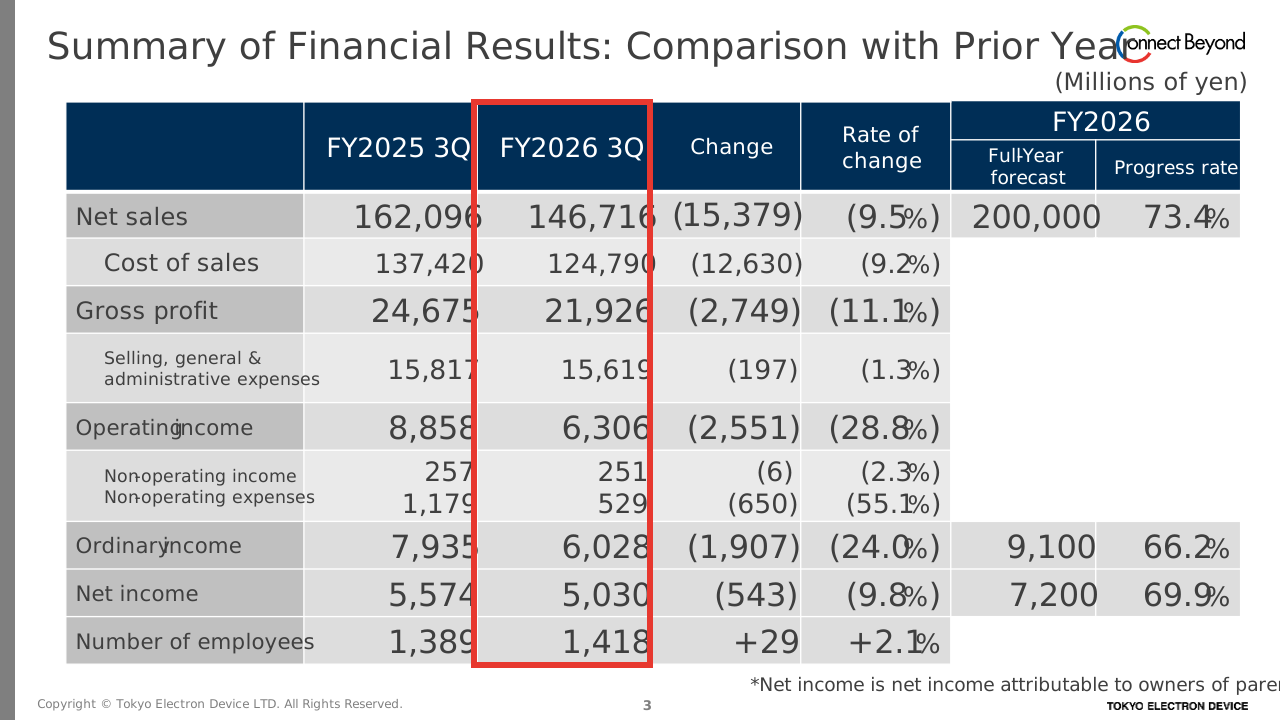
Compared with the same period of the previous year, net sales declined by 9.5 percent to ¥146.7 billion, ordinary income declined by 24 percent to ¥6.0 billion, and the ordinary income ratio was 4.1 percent.
Net income decreased by 9.8 percent to ¥5.0 billion. In addition, we recorded approximately ¥1.0 billion in extraordinary income from the sale of investment securities. This was due to the transfer of all shares held in Fidus Systems Inc., an equity-method affiliate.
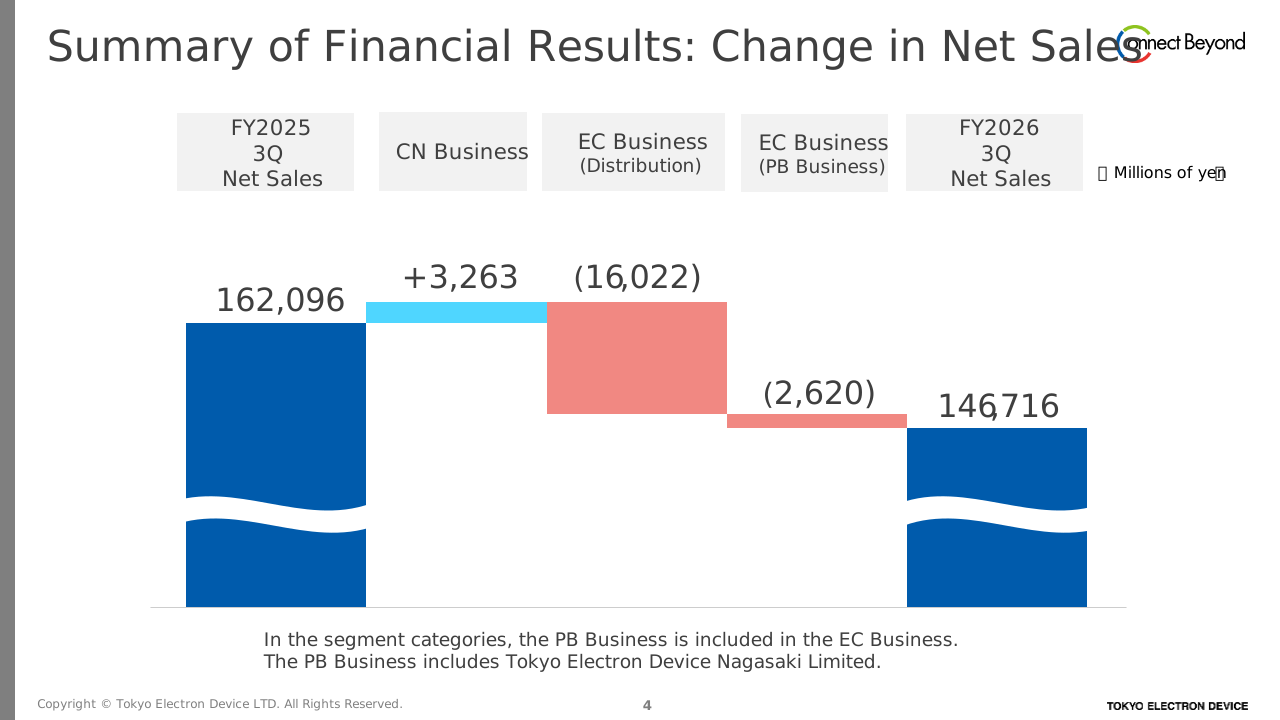
This slide shows changes in net sales by segment in graph form.
As you can see, while the CN Business recorded an increase in net sales, the distribution segment of the EC Business and the PB Business recorded decreases in net sales.
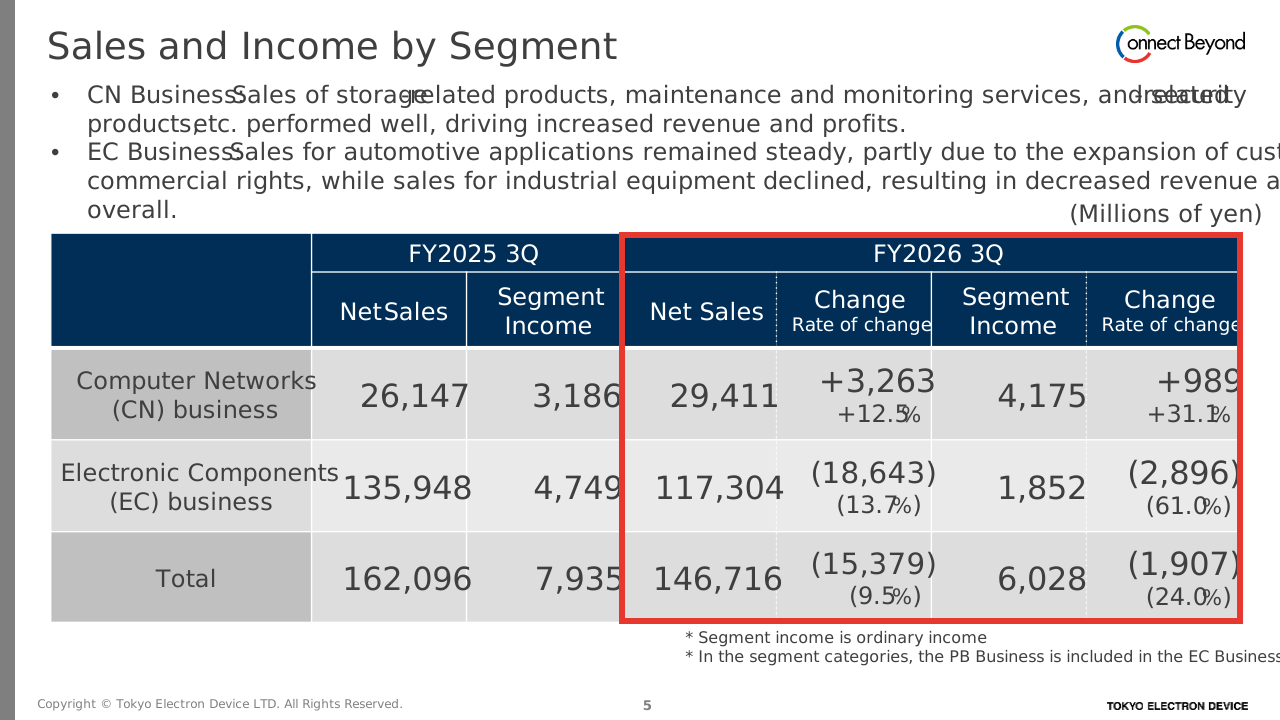
I will now explain the status of sales and income by segment.
In the CN Business, as corporate use of AI and the adoption of cloud-based IT infrastructure continue to advance, IT investment has remained solid overall. Under these conditions, strong sales of storage-related products, maintenance and monitoring services, and security-related products, among others, resulted in an increase in sales and income. Net sales increased by 12.5 percent to ¥29.4 billion, segment income increased by 31.1 percent to ¥4.1 billion, and the segment income ratio was 14.2 percent.
In the EC Business, customer inventory reductions within the supply chain have been progressing steadily, and demand for semiconductors is also showing a trend of gradual recovery. Sales for automotive applications has remained solid, supported in part by the expansion of customer commercial rights. On the other hand, due to a decline in sales to the industrial equipment, the EC Business recorded lower net sales and lower profits. Net sales decreased by 13.7 percent to ¥117.3 billion, and segment profit decreased by 61 percent to ¥1.8 billion.
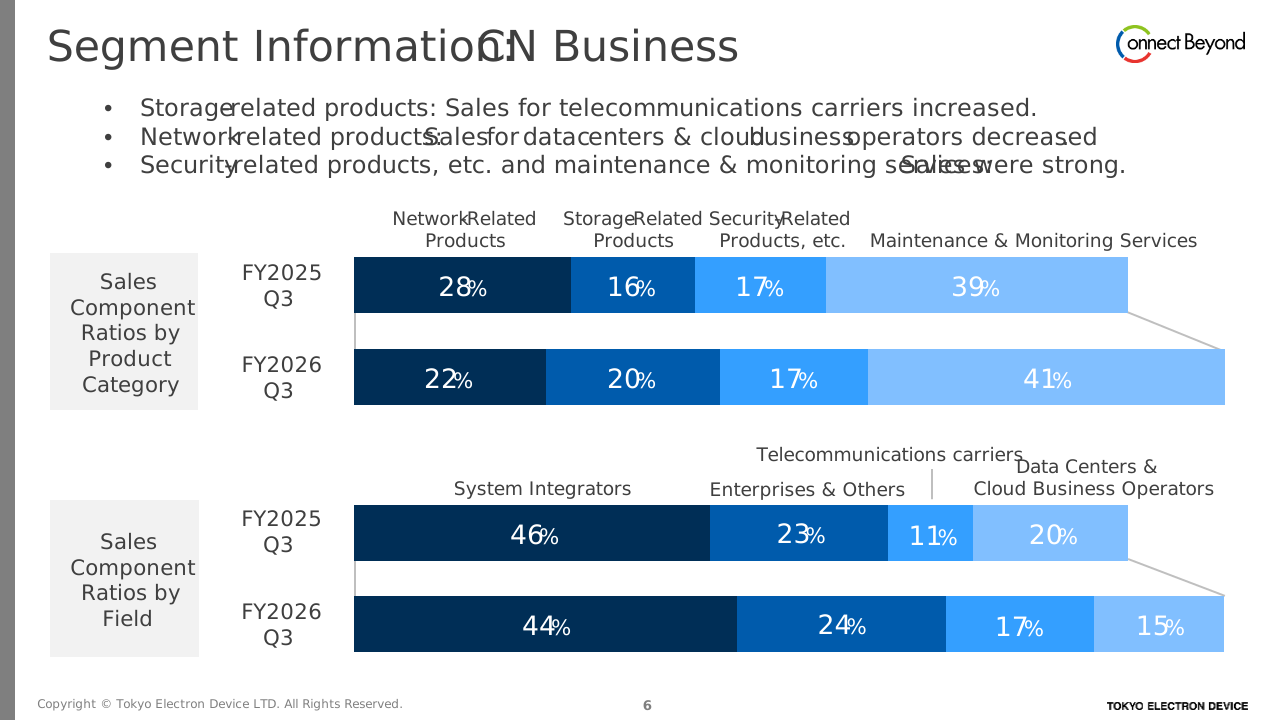
Now, I will explain the situation by segment.
In the CN Business, sales increased, mainly driven by storage-related products and maintenance and monitoring services. Within storage-related products, sales to telecommunications carriers increased. In network-related products, sales to data centers and cloud business operators, which had performed strongly in the previous fiscal year, declined.
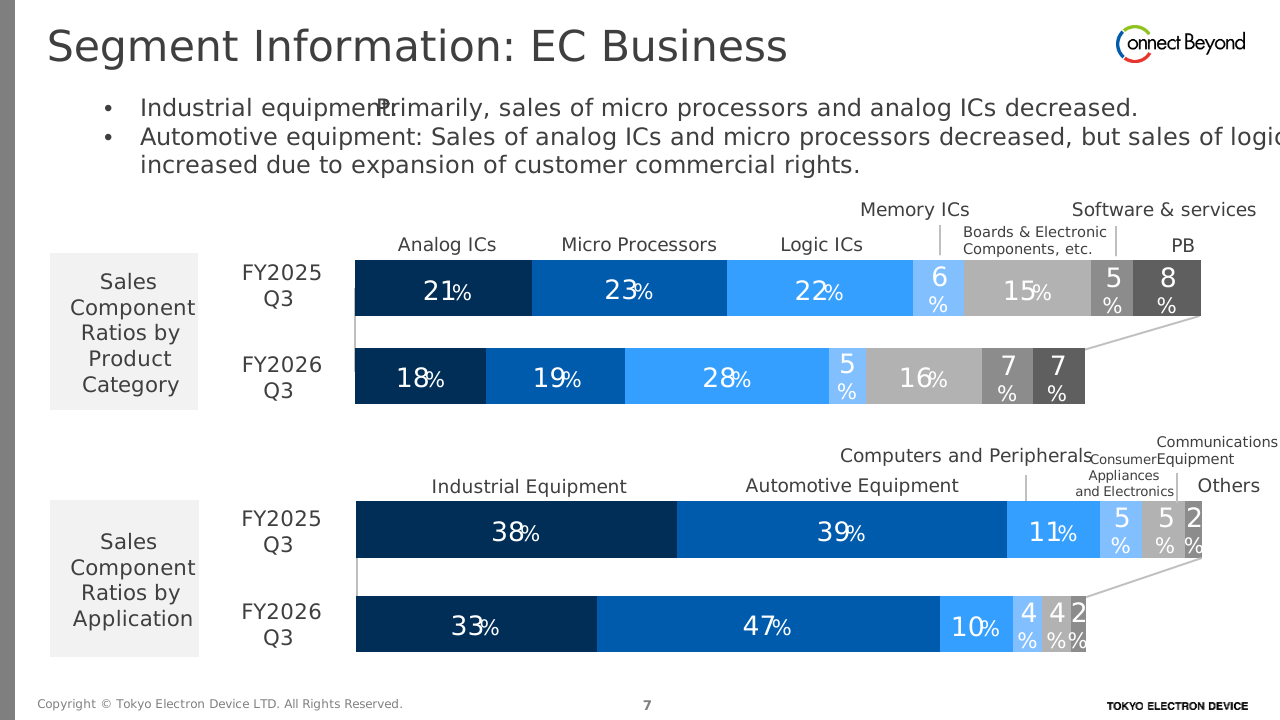
In the EC Business, performance by application was generally weak overall.
In industrial equipment applications, due to factors such as customer inventory adjustments, sales of micro processors and analog ICs declined, mainly. In the automotive equipment applications, net sales of logic ICs increased, reflecting the expansion of customer commercial right. On the other hand, due to the prolonged nature of customer inventory adjustments, net sales of analog ICs and micro processors declined.
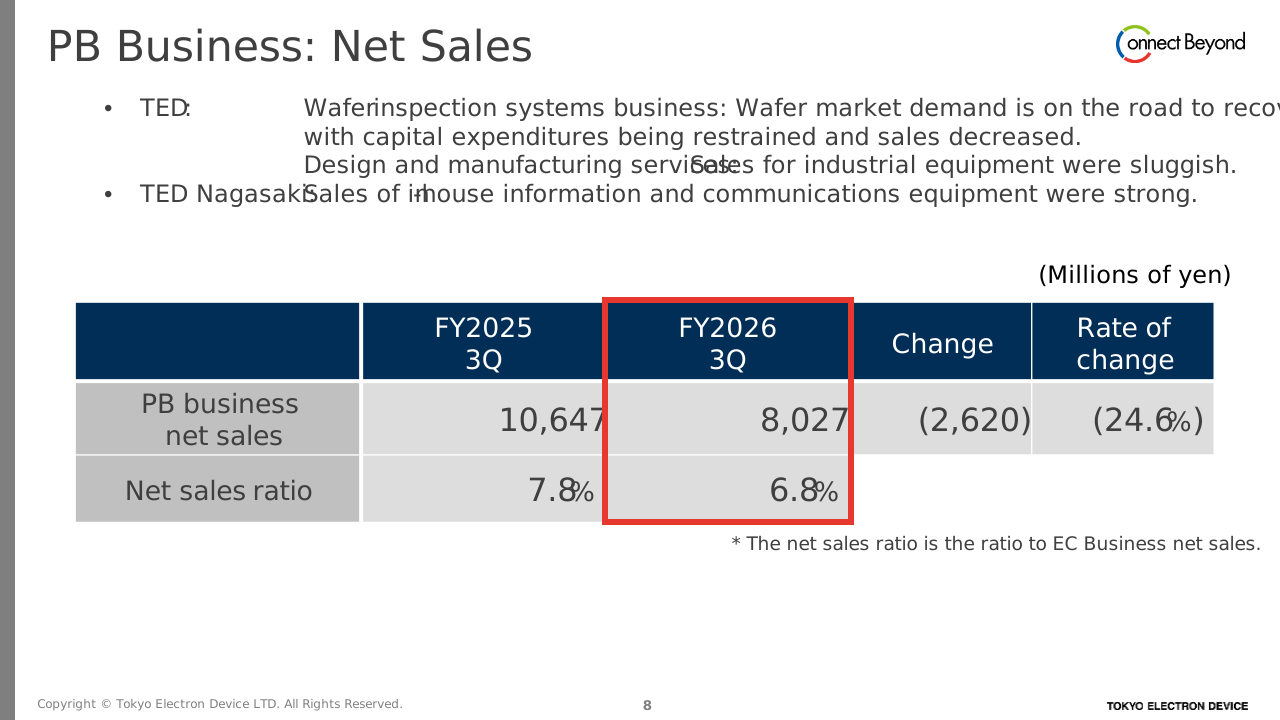
In the PB Business, net sales decreased by 24.6 percent to ¥8.0 billion.
In wafer inspection systems, demand in the wafer market is in the process of recovering, and for this reason, lower net sales were recorded. In addition, in design and manufacturing services, performance remained weak, mainly in industrial equipment applications. On the other hand, at TED Nagasaki, sales of the company’s in-house information and communications equipment performed well for data center applications.
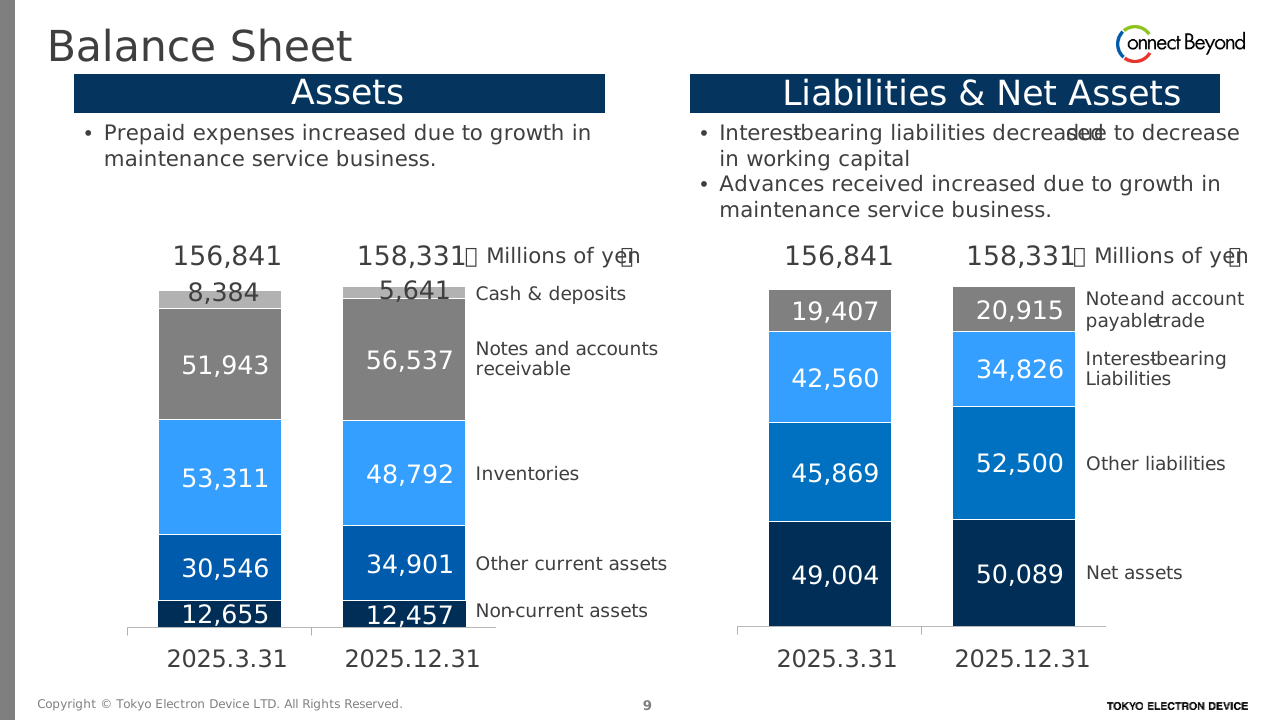
This is the Balance Sheet.
Total assets amounted to ¥158.3 billion, an increase of ¥1.4 billion compared with the end of the previous fiscal year. On the assets side, due to growth in maintenance services in the CN Business, prepaid expenses increased, resulting in an increase in other current assets. With respect to liabilities and net assets, as a result of a reduction in working capital, we proceeded with the repayment of borrowings, leading to a decrease in interest-bearing liabilities.
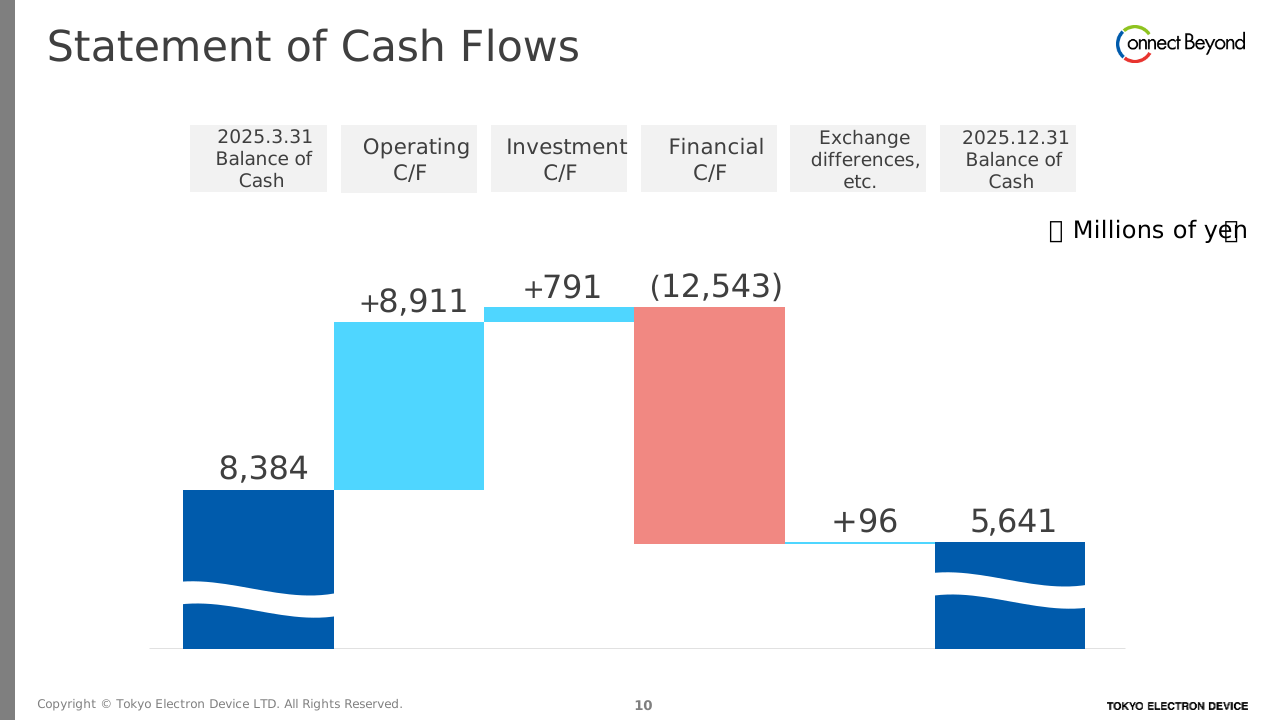
This is the cash flow situation.
Operating cash flow tends to be positive during periods when net sales are declining. Investing cash flow was positive due to the transfer of shares held in Fidus Systems Inc. Financial cash flow was negative as a result of the repayment of borrowings and the payment of dividends, among other factors.
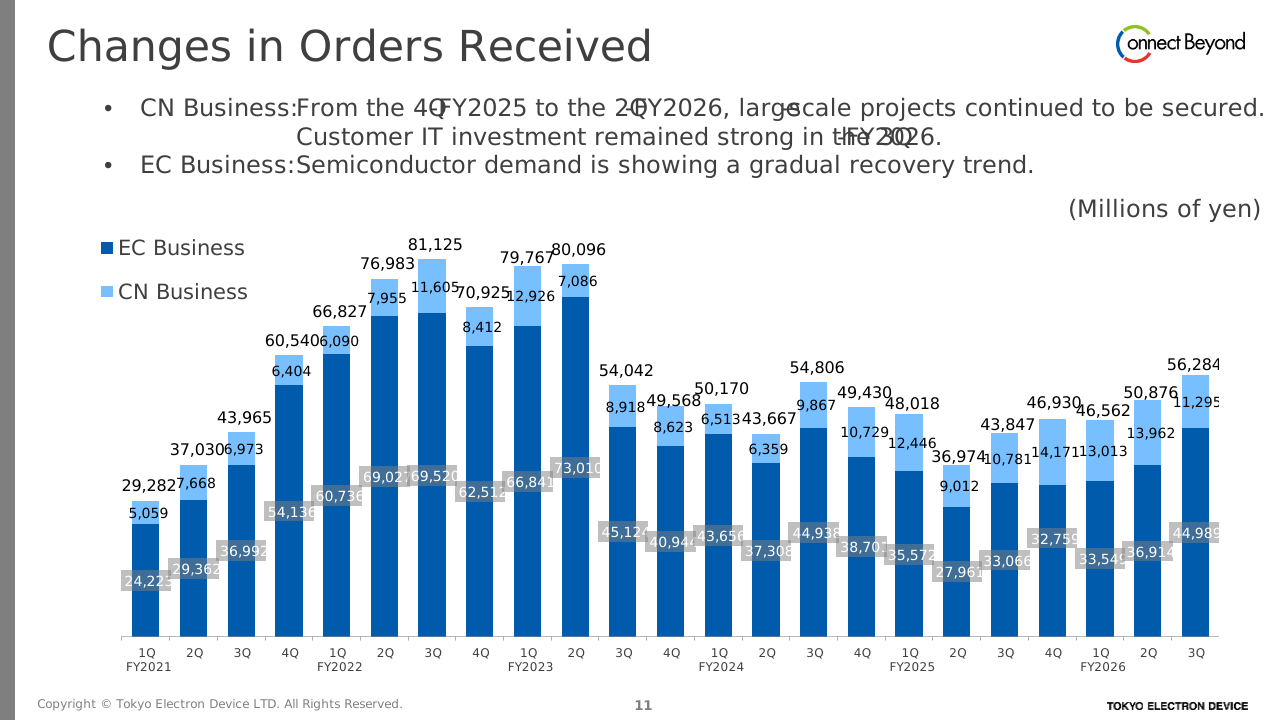
Orders received for the third quarter amounted to ¥56.2 billion.
In the CN Business, large-scale projects have continued since the fourth quarter of the previous fiscal year. Although the number of large-scale projects in the third quarter declined, corporate IT investment has remained solid, and we view the order situation as steady. In the EC business, customer inventories are being steadily worked down, and under this environment, order levels are gradually recovering from the adjustment phase.
That concludes my presentation.
Thank you for your time.